Horse riding offers an enjoyable way to develop confidence, improve balance, and build a strong connection with horses. However, riding also carries risks, particularly when a horse makes an unexpected movement or a rider loses balance and falls. Wearing a properly fitted horse riding helmet is one of the most important steps riders can take to reduce the risk of serious head injuries. Whether riding for leisure, participating in competitions, or learning essential equestrian skills, choosing suitable protective equipment should always be a priority. Understanding helmet safety, fit, construction, and maintenance can help riders make informed decisions and enjoy their time around horses with greater confidence.
Understanding the Importance of Horse Riding Helmet Protection
horse riding helmets are specifically designed to help reduce the risk of head injuries caused by falls, impacts, and certain collisions. Unlike ordinary hats or bicycle helmets, equestrian helmets are constructed to address hazards associated with riding, including falls from height and impacts with the ground or obstacles. Their protective shells and internal impact-absorbing materials are designed to manage some of the forces generated during an accident. Although no helmet can prevent every head injury, wearing an appropriate model can provide an important layer of protection. Riders should therefore consider a helmet an essential part of their riding equipment rather than an optional accessory.
Head injuries can occur in many riding environments, from indoor arenas and paddocks to open trails and competition grounds. Even experienced riders can encounter unexpected situations when a horse becomes startled, slips, or reacts to its surroundings. Beginners may face additional challenges while developing their balance, coordination, and ability to respond to a horse’s movements. Wearing a suitable helmet helps prepare riders for the possibility of an accident, regardless of their experience level. Making helmet use a consistent habit also encourages a positive safety culture among riding schools, families, trainers, and equestrian communities.
Choosing a Helmet That Meets Recognised Safety Standards
When purchasing a horse riding helmet, safety certification should be one of the first factors to consider. Different countries and equestrian organisations recognise particular helmet standards, so riders should check which certifications are required for their location and intended riding activities. Depending on the market, relevant standards may include ASTM F1163, often used alongside SEI certification in the United States, and other recognised equestrian helmet standards accepted by local authorities or competition organisers. Requirements can vary between disciplines and events, making it important to review the current rules before buying a helmet. Choosing a certified model helps ensure that the helmet has been assessed against specified performance requirements.
Appearance and brand reputation should never replace careful checks of a helmet’s safety credentials. Look for clear labelling, manufacturer information, and guidance on approved use, fitting, and replacement. Purchasing from a reputable equestrian retailer can make it easier to confirm that the helmet is genuine and intended for horse riding. Riders should also avoid second-hand helmets when the previous impact history is unknown, as hidden damage may compromise protection. Taking time to verify the certification and condition of a helmet helps riders make a safer and more informed purchase.
Finding the Correct Helmet Fit for Comfort and Security
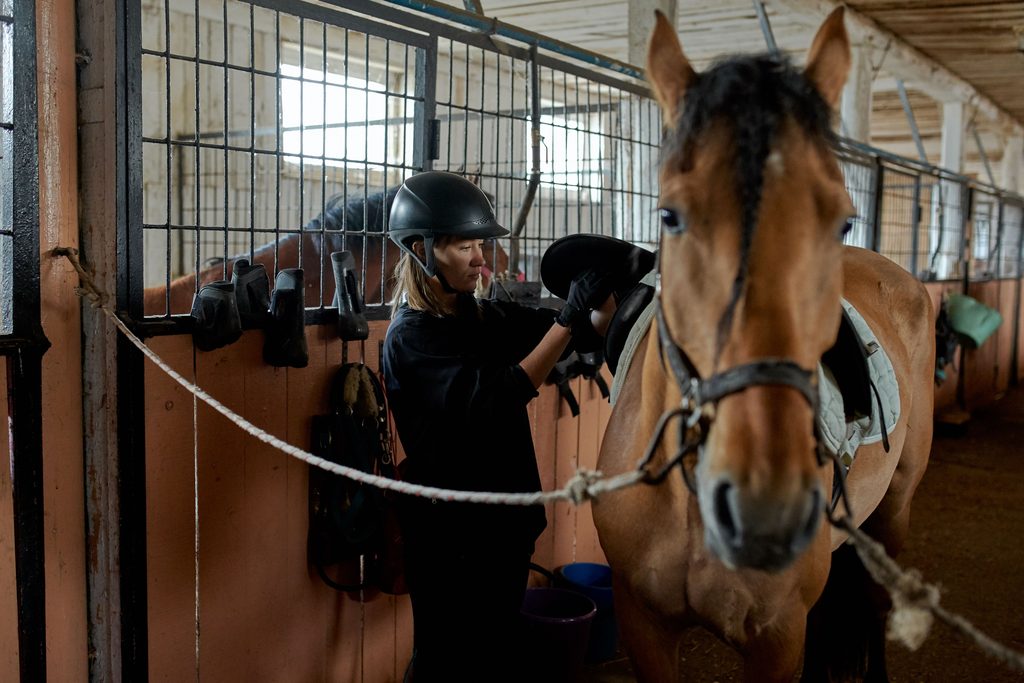
A helmet can only provide its intended level of protection when it fits correctly. It should sit level on the head, covering the forehead without tilting backward or resting too low over the eyebrows. The fit should feel secure and comfortably snug, without creating painful pressure points or excessive movement when the rider moves their head. A helmet that is too loose may shift during a fall, while one that is too tight can become uncomfortable and discourage consistent use. Since sizing and head shapes vary between brands, trying on different models and following the manufacturer’s fitting instructions is an important part of the selection process.
The retention system, including the chin strap and fastening mechanism, also plays a significant role in keeping the helmet properly positioned. Once fastened, the strap should be secure according to the manufacturer’s instructions without restricting breathing or causing discomfort. Riders should check that the helmet remains stable when they gently move their head and that the straps sit correctly around the ears and beneath the chin. Hairstyles, head coverings, and accessories can affect fit, so the helmet should be assessed in the same configuration in which it will be worn while riding. If a rider is unsure about sizing or adjustment, an experienced equestrian retailer can provide practical fitting guidance.
Maintaining Your Riding Helmet for Reliable Protection
Regular helmet care helps preserve its condition and makes it easier to identify signs of wear or damage. After riding, allow the helmet to air-dry in a well-ventilated area if it has become damp from sweat or rain. Clean the exterior and removable liners according to the manufacturer’s instructions, avoiding chemicals, solvents, or cleaning methods that could damage the shell or internal protective materials. Store the helmet in a suitable bag or protective case, away from direct sunlight, excessive heat, and conditions that may affect its materials. Keeping the helmet clean and storing it carefully can also make it more comfortable to wear regularly.
It is equally important to inspect the helmet before use and replace it after a significant impact, even if there are no obvious cracks or visible signs of damage. Internal impact-absorbing components may be compromised without clear external evidence. Helmets should also be replaced in line with the manufacturer’s guidance, taking into account their age, condition, and any relevant service-life recommendations. A helmet that has been dropped from a height or exposed to damaging conditions should be assessed according to the manufacturer’s advice. Riders should never attempt to repair structural damage themselves, as doing so may affect the helmet’s protective performance.
Building Safer Riding Habits Beyond Helmet Protection
Although a suitable helmet is essential, rider safety also depends on developing responsible habits around horses. Riders should use appropriate footwear, suitable clothing, and correctly maintained tack to support control and reduce avoidable risks. Learning how to approach, handle, mount, and dismount a horse safely can help prevent accidents before a ride even begins. Beginners should receive guidance from a qualified instructor and ride horses appropriate to their experience and ability. Checking the riding environment for hazards, such as slippery surfaces, loose equipment, or obstacles, also contributes to a safer experience.
Riders should remain aware of their surroundings and adjust their activities according to weather conditions, visibility, terrain, and the horse’s behaviour. Avoiding distractions, following stable rules, and communicating clearly with instructors or other riders can help reduce the likelihood of unexpected incidents. Children and young riders should be supervised appropriately and wear helmets designed to fit them correctly, rather than using oversized equipment they may grow into. Trainers and riding schools can reinforce these practices by making protective equipment checks part of their normal routines. When helmet use is combined with good instruction, suitable equipment, and thoughtful riding decisions, it becomes part of a comprehensive approach to equestrian safety.
Making rider safety a priority begins with choosing a certified, well-fitting horse riding helmet and wearing it consistently. Regular inspections, appropriate storage, and timely replacement help ensure that the helmet remains suitable for use. Riders should also remember that protective headgear works best as part of a wider safety routine that includes proper training, suitable equipment, and responsible horse handling. By making informed choices and developing consistent habits, riders can reduce avoidable risks and enjoy equestrian activities with greater peace of mind.