Most Melburnians only really think about street cleaning when it’s gone pear-shaped bits of grit across a freshly cleaned footpath, a storm drain choked with last autumn’s leaves, or a massive pile of building rubbish just sitting there on the kerb for three days. But the system that runs beneath the city’s daily life is actually working pretty smoothly not slow or disorganised at all.
Who’s Actually in Charge of Keeping Melbourne’s Streets Clean?
The structure’s a bit of a two-tiered system. Local councils look after the programmed cleaning of residential and commercial areas, while civil contractors have the task of dealing with construction zones on behalf of the developers & road authorities.
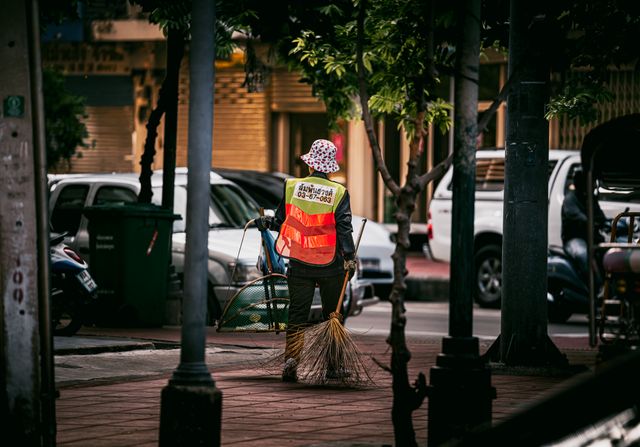
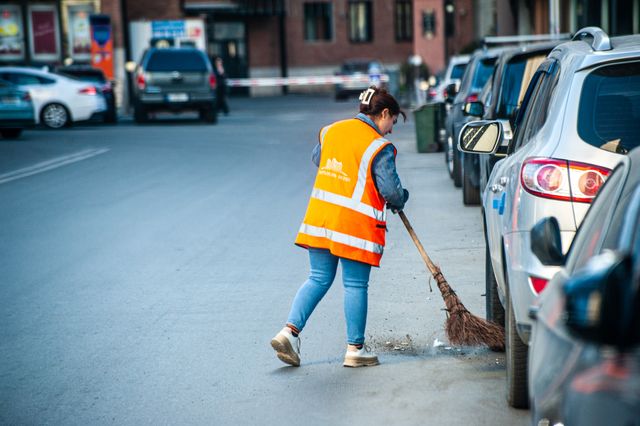
The City of Port Phillip runs one of the more obvious programs. Out in the suburbs, residential streets get swept every four weeks, with a mix of machines and manual work going on 24/7, 7 days a week. But down in the commercial zones, they get a much more intense frequency: the road and footpath get swept every day, the litter gets collected, and the public bins get a good blast of the high-pressure hose & the footpaths in the busiest hospitality areas get a good scrub. Now Acland Street & Fitzroy Street get cleaned on Mondays, Wednesdays & Fridays. Bay Street & Carlisle Street get swept twice a week. The City of Melbourne’s CBD cleaning goes on all day, every day, with the really busy areas getting a good clean multiple times across the day.
Autumn cranks it up a notch, though. Port Phillip’s got to manage around 32,500 trees across 530 streets and that means a lot more sweeping when the leaves start falling from late April to mid-July. The crews will scale up to get on top of it, and the normal schedules get bent to fit around the extra work.
What Kinds of Machines Are Actually Being Used?
The sweeper truck that most people picture the slow-moving orange beast is basically a road truck sweeper, and that’s what gets used for the main roads & major building sites. That sort of truck is great for dealing with a lot of big debris.
But aside from that
- Machine-mounted sweepers on skid-steer trucks are good for dealing with tight little project sites, inner suburban backstreets, and the like where the big trucks can’t get in.
- Regenerative air sweepers are brought in if you need to control really fine dust levels – like on tunnel work & big CBD upgrades.
- And then there are the compact footpath units either on two feet or on wheels that come out for footpaths, tunnels, and all the enclosed spaces like multi-storey car parks.
You’ll often find that the right machine for one job will just be the wrong one for another. Put a big road sweeper in a narrow inner-suburban laneway and you’ll have all sorts of access & compliance problems. Put a little footpath unit on an A-class highway and you’ll just be wasting your time. So it’s matching the right machine up with the kind of site you’re dealing with that’s where the real skill comes in.
Why Does Sweeping Frequency Vary So Much Between Melbourne’s Suburbs?
It all comes down to traffic levels, what kind of rubbish is getting kicked up, how many trees there are in the area, and whether there’s any building work going on that’s making a mess. So in the quieter parts of regional Victoria, the streets might only get swept every now and then. But down in the inner city, the busy shopping strips get swept every day sometimes even more often.
Environmental Issue That Goes Unnoticed
Street Sweeping Melbourne has environmental significance that rarely gets mentioned in public discourse. Sweeping machines that trap dust and grit effectively decrease the sediment input into Melbourne’s stormwater system. The accumulation of grit on asphalt wears down the surface, advancing the time for resurfacing and imposing additional expenses on the council.
The bigger connection of the catchment area is important as well. Everything that goes into Melbourne’s drainage system ultimately ends up in the Port Phillip Bay catchment area. Litter, debris, leaves, and other waste collected at the curb are the litter that won’t get into waterways. Hence, street sweeping can be seen as a means of stormwater protection rather than a cleaning procedure.
Reporting Dumping in Melbourne’s Streets
Issues related to dumping, litter, and other street maintenance problems can be reported through the City of Melbourne’s online service portal. In case of hazardous materials or an emergency situation, direct contact with council is required rather than online reporting. For Port Phillip locals, issues of dumped rubbish can be reported to the council through its online reporting system. Dumped materials are inspected by council officers and may incur an instant fine of $660 or a penalty notice of $9,900 under the Environmental Protection Act 2017.