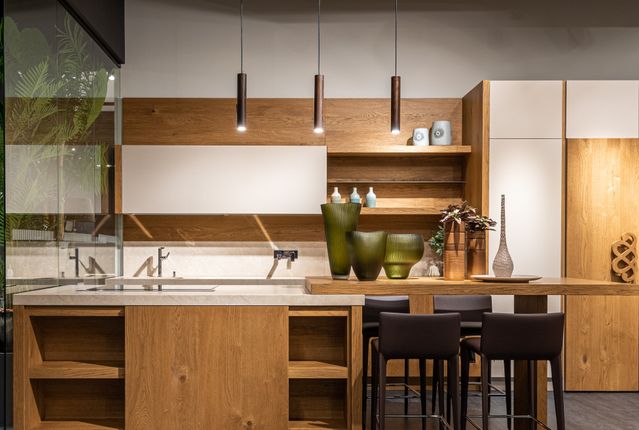
Some kitchen materials look best when every surface is a perfect uniformity Marble is another matter. What is appealing is the movement, the veining, the tonal shifts, the little visual surprises that make one slab different from another. Thus good design starts with acceptance of variation and not with trying to hide it. It is more useful to ask how the stone will read across the whole room, instead of asking if every section matches exactly.
Consider the visual hierarchy of the kitchen prior to selecting cabinetry colours or splashback finishes. Decide what surface you want to draw attention to first, where the natural light is coming from and what part of the room can be seen from adjoining spaces. A dramatic slab can be a centrepiece, while a more subdued option can sit alongside timber cabinetry, coloured joinery or a strong feature wall without competing.
Design around the stone you have.
The best marble kitchen benchtops are those that are complemented by the surrounding choices, rather than forcing the slab into a rigid scheme. Look at the direction of the veining, the relationship between light and dark areas, and how the pattern becomes more active at points. Those details can decide where joins are made, what section is an island face and if the waterfall edge appears to be intentional or an eye sore.
Lighting deserves attention too. Warmer pendants may improve the richness of creamy undertones, while cooler light can bring out grey veining. Natural daylight can also change the apparent contrast during the day. So, seeing stone samples under showroom lighting can be deceptive. Compare them if possible to the actual cabinetry, flooring and wall colours surrounding it.
Lay Out Based on the Practical Zones
A beautiful kitchen still has to survive breakfast, meal prep, school bags, grocery unloading and late-night clean-up. Map out those activities first, then think about where the most visually distinctive stone should be. You might want a quieter pattern for the most active preparation area, while an island used primarily for serving and conversation could have more dramatic movement.
Edge profiles also influence the character of the room. Thin edges can provide a light contemporary look, while deeper profiles can add more architectural weight to an island. It should be dictated by the size of the space and the proportions of the cabinetry.” Too much heavy detailing in a small kitchen can make the bench dominate, while too little visual weight in a large open-plan room can make it feel disconnected from the rest of the design.

After the Day of Installation
Natural stone rewards those who know how the surface will weather. Spills should be cleaned up right away. Cutting boards should take the brunt of knives. Trivets can protect the surface from hot cookware. These practices are not about keeping the kitchen as a museum. They are just ways to allow the material to get character without turning everyday wear into avoidable damage.
The most memorable marble kitchens rarely strive for perfect sameness. They use variation as part of the design language, balancing stone with light, cabinetry, movement and routine. A room that is based on the inherent character of the material feels considered rather than decorated and the benchtop is part of the architecture rather than another finish.